

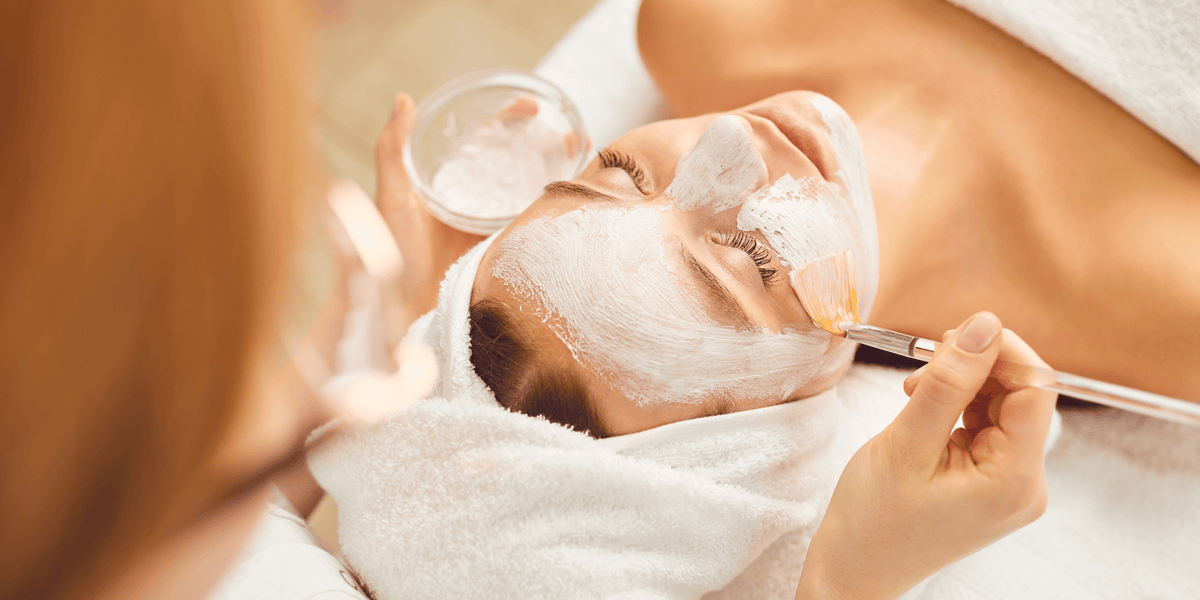
Many of us choose our skincare the same way: we read a label, follow a recommendation, or pick a product that worked for someone else. Sometimes it works. Often, the result is a bathroom shelf full of products that don't quite suit our skin.
A professional skin analysis takes the opposite approach. Before recommending anything, the esthetician starts by looking at your skin and listening to you. Here's what that really involves, and why it's worth doing before you change your routine.
The short answer: during a professional skin analysis, the esthetician discusses your habits and concerns with you, cleanses your skin, then observes it closely, often with a magnifying lamp, to assess its type and its current needs: hydration, oiliness, texture, sensitivity, tone. She then recommends a routine and, if relevant, treatments adapted to what your skin actually needs, rather than to what you assume it needs.
Why Is It So Hard to Assess Your Own Skin?
Looking in the mirror, it's easy to draw the wrong conclusions. Shine on the forehead can make you think your skin is oily, when it may also be dehydrated. Tightness can be a sign of dryness, but also of a cleanser that's too harsh. Redness can come from many different factors.
Two notions are often confused:
- Your skin type (dry, normal, combination, oily) is relatively stable and largely determined by your nature.
- Your skin's current condition (dehydrated, sensitized, dull, uneven) changes with the seasons, your environment, your stress level and the products you use.
A good routine takes both into account. Our articles on common misconceptions about skin types and on dry vs. dehydrated skin explain these differences in more detail.
What Happens During a Professional Skin Analysis?
Each institute has its own way of working, but a professional skin analysis generally follows these steps.
1. A conversation about you and your routine
The esthetician asks about your current routine, the products you use, what bothers you about your skin, how it reacts to changes in season, and any known sensitivities or allergies. This listening step is essential: it puts what she observes into context.
2. Cleansing the skin
To observe the skin as it really is, it needs to be free of makeup and impurities. The esthetician gently removes makeup and cleanses your face.
3. A close observation of the skin
Using her eyes, her touch and often professional tools such as a magnifying lamp, the esthetician examines different areas of the face. She looks, for example, at how shine is distributed, the feel of the skin, its suppleness, the appearance of pores, redness, unevenness in tone and the presence of fine lines.
4. An explanation of what she sees
She then explains her observations in clear terms: your skin type, its current needs and what may be contributing to them, such as a routine that's too harsh or not nourishing enough for the season.
5. Personalized recommendations
Finally, she suggests a home routine adapted to your skin: which products to use, in what order and how often. If relevant, she can also propose in-institute treatments to complement your routine.
At France Laure partner institutes, a personalized diagnosis is part of the approach before each treatment, to determine your skin's specific needs, with recommendations and follow-up in the institute or online. Learn more on our in-store skin diagnosis page.
What Are the Benefits of a Professional Analysis?
- Choosing products that truly suit you. You avoid buying formulas that are too rich, too light or too stimulating for your skin.
- A simpler routine. Knowing your skin's real needs often means using fewer products, but better chosen ones.
- Understanding how to use your products. The order, the quantity and the frequency are just as important as the product itself.
- Adjusting over time. Your skin changes with the seasons and the years. Regular follow-up helps your routine evolve with it.
How to Prepare for Your Skin Analysis
- Make a list of your current products, or take a photo of them. It's very helpful for the esthetician.
- Note your questions and concerns in advance, so you don't forget anything.
- Avoid trying a new, intense product in the days before your appointment, so your skin is observed in its usual condition.
- Be open about your habits, even the less perfect ones. The goal is not to judge, but to understand.
What a Skin Analysis Is Not
An esthetician is a skin care professional, not a physician. A skin analysis is a cosmetic assessment: it helps choose the right skincare and treatments, but it doesn't replace a medical consultation. If you notice a persistent skin problem, a painful or worsening lesion, or a mole that changes, consult a doctor or a dermatologist.
How Often Should You Have Your Skin Analyzed?
There's no single rule. Many professionals recommend reassessing your skin when the seasons change, when you notice your skin behaving differently, or before starting a new routine. In Quebec, the shift from fall to winter is a particularly good time, since cold outdoor air and heated indoor air can change the skin's needs.
Frequently Asked Questions About Skin Analysis
Do I need to come without makeup?
It's not essential, since the esthetician will cleanse your skin before observing it, but arriving with little or no makeup makes the step quicker.
Will I have to buy products afterward?
The purpose of an analysis is to guide you. You remain free to decide what you want to change in your routine, and when.
What's the difference between a skin analysis and a facial treatment?
The analysis is the assessment that comes first. The treatment is the care itself, adapted to the needs identified during the analysis. Our article on why choose salon treatments explains what in-institute care can add to your home routine.
Can my sensitive skin be analyzed?
Yes, and it's especially useful for sensitive or reactive skin. To better understand the difference between the two, read our article on sensitive vs. reactive skin.
The Bottom Line
A professional skin analysis is the simplest way to stop guessing. In a single appointment, you gain a clearer picture of your skin, a routine built around its real needs, and the guidance to use your products well. It's also the heart of what we believe at France Laure: good skincare starts with expert advice.
Are you an esthetician? Discover our professional expertise and learn how to become a France Laure partner.
Ready to get to know your skin better?
A France Laure partner esthetician can assess your skin in person and build a routine around what it actually needs.


