

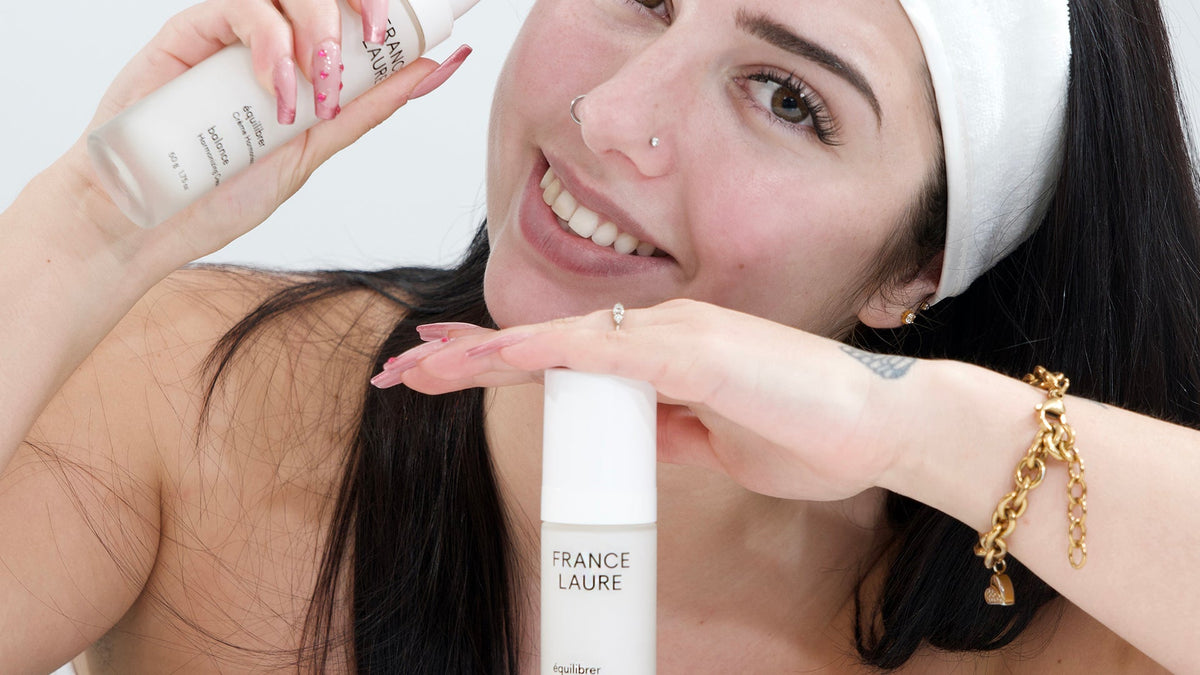
Your forehead and nose look shiny by midday, yet your cheeks feel tight after cleansing. If that sounds familiar, you probably have combination skin. And when the temperature drops in Quebec, this contrast can become even more noticeable: the cold air outside and the heated air inside put the drier areas of the face to the test, while the T-zone keeps its usual shine.
The good news: you don't need two separate routines. You simply need to adjust a few habits so each zone gets what it needs.
The short answer: in fall and winter, care for combination skin with a gentle cleanser that doesn't strip, a light hydrating serum on the whole face, and a moisturizer applied according to the zone: a lighter layer on the T-zone, a more generous one, or a richer texture, on the cheeks. Avoid harsh products on the whole face, exfoliate gently once a week, and limit hot water.
What Exactly Is Combination Skin?
Combination skin has areas that behave differently. Most often, the T-zone (forehead, nose and chin) is oilier and more prone to shine and visible pores, while the cheeks are normal to dry.
This isn't just an impression. A study published in Skin Research and Technology in 2005, which looked at regional and seasonal variations in facial sebum, found that the forehead, nose and chin produced more sebum than the cheeks. The same study identified summer as the season with the highest sebum production.
Why Does Combination Skin Change in Fall and Winter?
Several factors typical of the colder months can make the drier areas of the face more uncomfortable:
- Cold, dry outdoor air, which can leave the skin feeling tight.
- Heated indoor air, which is often very dry in our homes and offices during winter.
- Hotter, longer showers, which can make the skin feel drier.
- Habits kept from the summer, such as a purifying cleanser or a mattifying routine that becomes too harsh for the cheeks once the cold sets in.
The result: the cheeks may feel drier or even dehydrated, while the T-zone still shines. If you're unsure whether your skin is dry or dehydrated, our article on dry vs. dehydrated skin explains the difference.
Common Mistakes With Combination Skin
- Treating the whole face as oily skin. Strong purifying products applied everywhere can leave the cheeks uncomfortable without really solving the shine.
- Skipping the moisturizer. Even oily areas need hydration. Read our article Oily Skin: Do You Really Need a Moisturizer?
- Applying a rich cream everywhere. A very rich texture on the T-zone can make it feel heavy or look shinier.
- Exfoliating too often. Once a week is generally enough, especially in winter.
Your Fall and Winter Routine for Combination Skin
1. Cleanse gently, morning and night
Choose a cleanser that leaves the skin fresh and clean without that tight feeling afterwards. Use lukewarm rather than hot water, and pat your face dry instead of rubbing.
2. Refresh with a toner
A toner adapted to combination skin completes the cleanse and can help the T-zone look more matte. Apply it to the whole face, or focus on the T-zone if your cheeks are very dry.
3. Hydrate with a light serum
A lightweight, water-based serum brings hydration to the whole face without weighing down the oilier areas. It's the step that helps both zones feel more balanced.
4. Moisturize according to the zone
This is the key to the winter routine. Apply a thin layer of moisturizer on the T-zone, and a more generous layer on the cheeks. If your cheeks remain tight, you can use a richer cream on those areas only.
5. Once a week: exfoliate and mask
A gentle exfoliation helps refine the skin's texture and the look of pores. To choose the right type, read our guide on choosing the right exfoliant. You can also try "multi-masking": a purifying mask on the T-zone and a hydrating mask on the cheeks, at the same time.
The Balance Line: Designed for Combination to Oily Skin
Our Balance line was developed for combination to oily skin. Its lightweight textures hydrate without heaviness, which makes them easy to adapt to each zone of the face.

Balance Cleansing Gel
To cleanse with freshness. This cleansing gel gently cleanses and purifies the skin, leaving a refreshing, clean feeling on the face, neck and décolleté.

Balance Perfecting Toner
For a fresh, matte-looking T-zone. Light and quickly absorbed, this toner leaves combination to oily skin clean, mattified and luminous, without a greasy residue.

Balancing Intense Serum
To hydrate the whole face without heaviness. Its lightweight, water-based texture absorbs quickly. It intensely hydrates, soothes the skin and helps refine the look of pores.

Balance Harmonizing Cream
For the day. Formulated for combination to oily skin, this day cream deeply hydrates and comforts drier areas, with a sensory touch of orange, geranium and tangerine essential oils.

Balance Repairing Cream
For the night. This night cream provides intense hydration and helps reduce the appearance of imperfections, leaving the skin smooth, soft and healthy-looking in the morning.
If your cheeks need more comfort during the coldest weeks, you can pair the Balance routine with a richer cream on those areas, chosen from our Dryness & Tightness collection. You'll find all our formulas for this skin type in the Combination Skin collection.
Frequently Asked Questions About Combination Skin in Winter
Should I change my routine completely when winter arrives?
Not necessarily. Often, adjusting the cleanser, the amount of cream and the frequency of exfoliation is enough. Change one product at a time to see how your skin responds.
Can I use two different creams on my face?
Yes. Applying a lighter texture on the T-zone and a richer one on the cheeks is a simple and effective way to care for combination skin.
Why does my T-zone still shine in winter?
The T-zone naturally produces more sebum than the cheeks. That's why a routine adapted to each zone works better than a single approach for the whole face.
Is combination skin the same as dehydrated skin?
No. Combination skin is a skin type. Dehydration is a temporary condition that can affect any skin type, including combination skin, especially in winter.
The Bottom Line
Combination skin doesn't need two routines, just a smarter one. In fall and winter, cleanse gently, hydrate the whole face with a light serum, adapt the amount and texture of your cream to each zone, and keep exfoliation to once a week. Your skin will feel more balanced and comfortable throughout the cold season. For more cold-weather tips, read our article on hydration in winter.
Not sure which products are right for your skin?
Every skin is different. A France Laure partner esthetician can assess your skin in person and build a routine around what each zone of your face actually needs.


